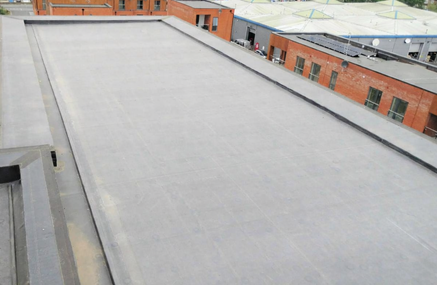
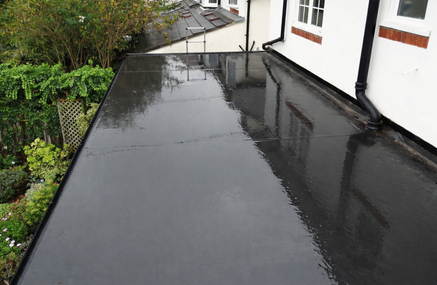
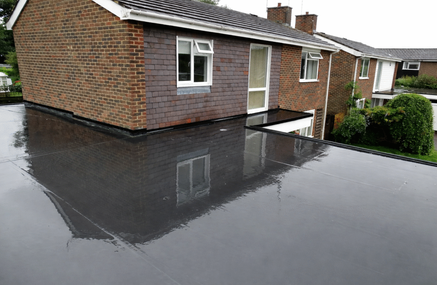
For generations, UK homeowners have been conditioned to view flat roofs as temporary structures - liabilities that require a watchful eye and a bucket in the hallway every ten or fifteen years. However, the introduction of EPDM has fundamentally shifted this narrative. It is no longer a question of "when will it leak?" but rather "will this roof outlive me?" For those looking to promote the benefits of an EPDM roof, understanding the life expectancy is crucial to appreciating its value.
Beyond the Fifty-Year Benchmark
The headline statistic often cited in the industry is that EPDM rubber roofing has a life expectancy of more than fifty years. Unlike marketing hyperbole attached to some construction products, this figure is grounded in both rigorous laboratory aging tests and real-world historical data. The first commercial EPDM roofs installed in the United States during the 1960s are largely still in place and performing today, having withstood over half a century of weathering. This longevity is derived from the membrane’s chemical structure; it is a single-ply synthetic rubber that is inherently resistant to ultraviolet (UV) radiation and ozone. While traditional felt bitumens rely on a layer of mineral chippings to block the sun, EPDM requires no such protection. It does not dry out, crack or become brittle under the relentless beating of the sun, meaning its structural integrity in year forty is remarkably similar to its condition on day one.
The Role of Flexibility in Longevity
One of the primary killers of roofing materials in the UK is the thermal cycle. A flat roof can experience surface temperatures below freezing at night and soar upwards on a hot summer afternoon. Rigid materials struggle with this fluctuation, leading to expansion cracks and splits. EPDM, however, is engineered to elongate by over 300% without breaking. This exceptional elasticity allows the membrane to breathe with the building, expanding and contracting effortlessly through decades of freeze-thaw cycles. It is this refusal to become rigid that ensures the waterproofing layer remains intact long after other materials would have fatigued and failed.
Installation: The Variable in the Equation
While the rubber membrane itself is virtually indestructible in a residential context, the practical life expectancy of the roof system is heavily dependent on the quality of the installation. A sheet of EPDM may last indefinitely, but it relies on adhesives, tapes and trims to keep the water out. If the membrane is bonded to a damp substrate or if the edge trims are secured poorly, the system can fail even if the rubber is perfect. This is why purchasing high-quality, proven adhesives and preparing the deck correctly (ideally with 18mm OSB3) is so vital. The "weak points" are rarely the material, but rather the workmanship or the sub-standard glues used to secure it. When installed correctly, with attention paid to the seams and perimeters, the system functions as a seamless unit that requires almost no maintenance to reach that half-century milestone.
A Sustainable Investment
Finally, longevity is the ultimate metric of sustainability. In a throwaway culture, installing a product that does not need to be ripped up and sent to landfill every 15 years is a significant environmental statement. While the initial cost of EPDM components may be higher than traditional mineral felt, the cost-per-year over its lifespan makes it one of the most economical choices available. You are essentially pre-paying for decades of security. For the homeowner, this means the roof installed today is likely the last one the property will need for a generation, transforming a flat roof from a recurring headache into a permanent, "fit-and-forget" asset.