You have chosen your membrane, calculated your square footage and perhaps even selected your trims, but the longevity of any new EPDM rubber roof depends entirely on what lies beneath it. Even the highest quality EPDM is only as good as the surface it is adhered to. If the substrate is unstable, damp or incompatible, the membrane will eventually fail regardless of how well it was installed. For contractors, understanding the correct base is a critical step in the roofing process.
OSB3 Sterling Board
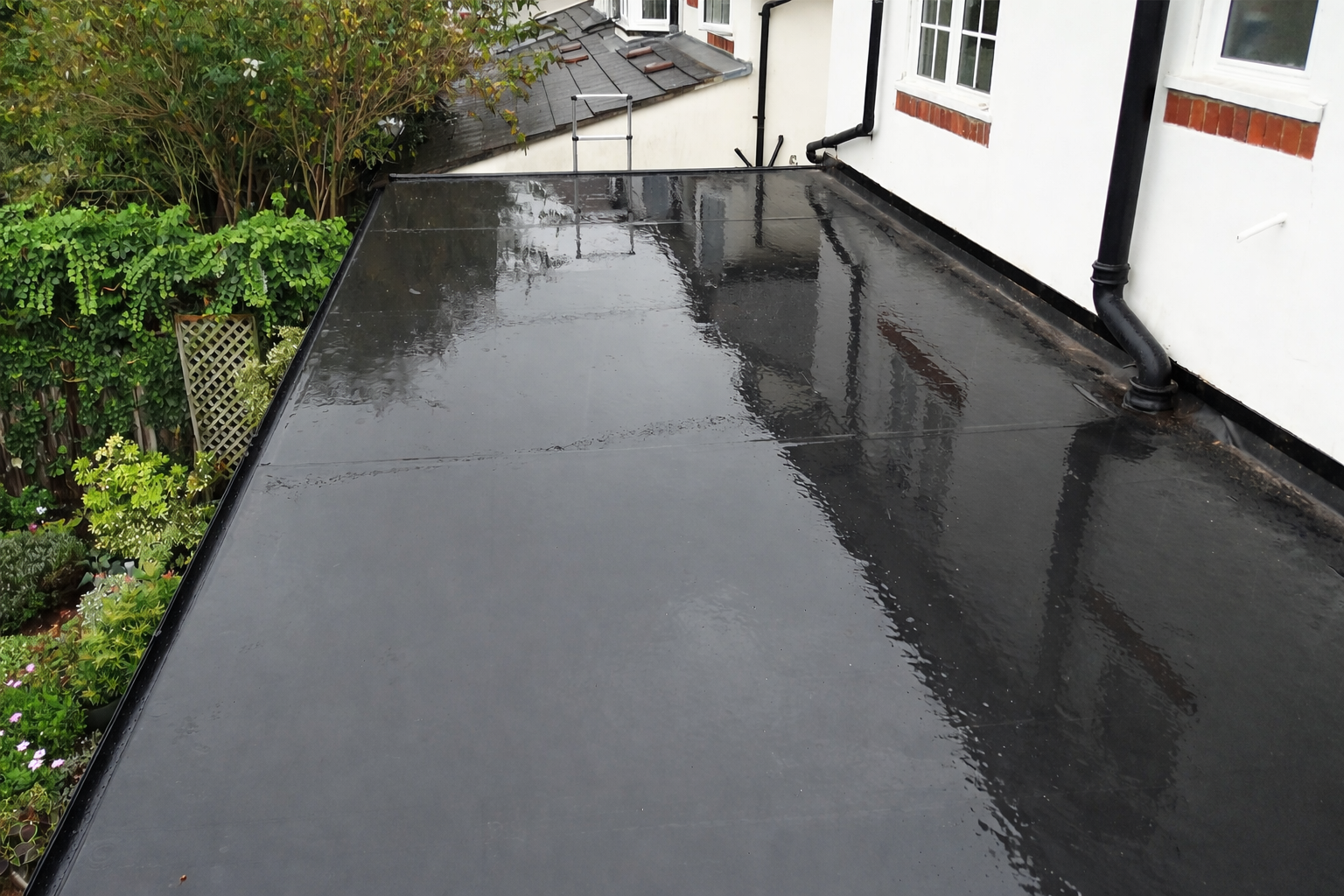
For the vast majority of residential flat roofs, the undisputed champion of substrates is 18mm OSB3. While it may look like a chaotic collection of wood chips pressed together, this engineered timber is structurally superior to many alternatives and is the industry recommendation for a reason. Specifically, tongue-and-groove OSB3 provides a perfectly flat, smooth surface that interlocks to prevent ridges from appearing under the rubber. Crucially, it is hygroscopic enough to work in perfect harmony with water-based deck adhesives. When you roll out the glue, the timber absorbs just enough moisture to create a chemical weld with the membrane, resulting in a bond that is often stronger than the wood itself. If you are building a new extension or stripping an old roof back to the joists, this should always be your first choice.
Plywood & Timber Alternatives
Before OSB took over the market, plywood was the traditional go-to, and it remains a viable option provided you choose the right grade. You must use a WBP (Weather and Boil Proof) or marine-grade plywood to ensure it can withstand the inevitable humidity fluctuations of the British climate without delaminating. However, caution is advised with cheaper plywoods; knots and splinters can sometimes telegraph through the rubber membrane over time, creating aesthetic imperfections or even puncture risks. If you do choose plywood, ensure the surface is sanded smooth and free of any sharp edges. It is also worth noting that standard chipboard is generally unsuitable for flat roofing as it acts like a sponge when wet, losing all structural integrity immediately.
Laying EPDM on Concrete & Masonry
It is entirely possible to lay EPDM onto a concrete or masonry roof, but the installation method changes significantly. Unlike timber, concrete is non-porous, meaning water-based adhesives will not dry effectively as the moisture has nowhere to escape. Instead, you will typically need to use a high-strength contact adhesive, which acts like a giant sticker, bonding instantly upon contact. The concrete must be fully cured, exceptionally dry and free of dust or laitance (the milky, powdery layer that sits on top of new concrete). In many cases, a primer is required to seal the surface before the adhesive is applied.
Insulation & Warm Roofs
If you are upgrading your home’s thermal efficiency with a "warm roof" design, you might be tempted to stick the rubber directly to the insulation boards. This is technically possible but requires specific materials. Most rigid insulation boards come with a foil facing that nothing sticks to reliably. To bond EPDM directly to insulation, you must use tissue-faced PIR boards which provide the necessary texture for the adhesive to grab. However, the most robust method (and the one favoured by professional roofers for longevity) is to sandwich the insulation between the joists and a new top layer of OSB3. This 'sandwich' approach ensures you have the thermal benefits of the insulation combined with the superior adhesion properties of a timber deck.
Can You Lay EPDM Over Old Felt?
This is perhaps the most frequently asked question in the industry. The short answer is that you should generally avoid adhering EPDM directly to old bitumen or felt. The oils in the bitumen can react chemically with the rubber over time, causing it to degrade, and the uneven surface of an old felt roof looks terrible when covered with a smooth rubber sheet; plus, water-based adhesives will not bond to the waterproof bitumen. If your existing felt roof is structurally sound but leaking, the best practice is to "overboard" it. By screwing fresh OSB3 boards through the old felt and into the joists below, you create a brand new, clean and compatible surface without the mess and cost of stripping the old roof completely.